
At a water conservancy project site in Laos, the customer independently purchased lug butterfly valves and rubber expansion joints for pipeline assembly, and equipment malfunction occurred after construction. The customer bought DN300 lug butterfly valves and DN300 expansion joints separately, placing orders merely according to nominal diameter. Without consulting technical specialists to verify the structural dimensions of the products, the customer ignored the internal bore difference between these two types of products.
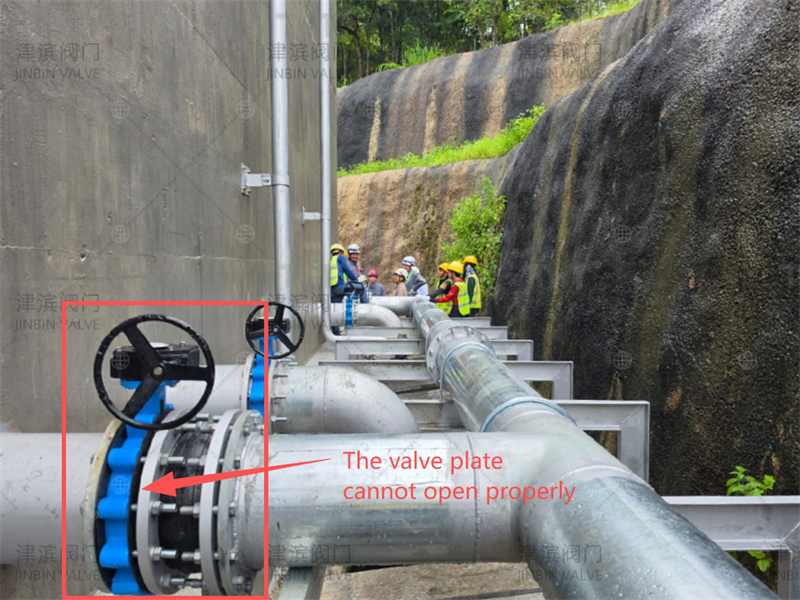
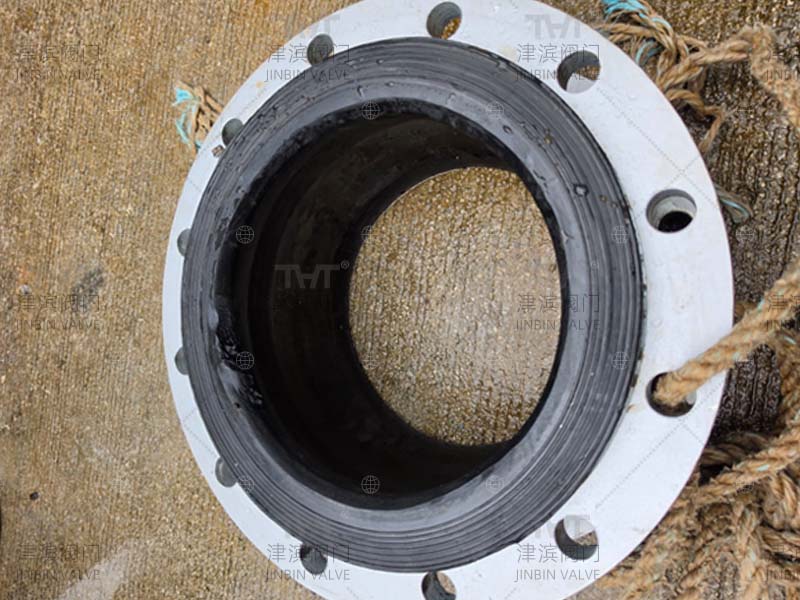
After installation and commissioning, it was found that the actual inner diameter of this DN300 expansion joint is smaller than the internal passage of the lug butterfly valve with the same nominal size. When the butterfly valve disc rotates, it is blocked by the port of the expansion joint. The valve disc cannot open fully, so the pipeline system cannot be put into normal service.
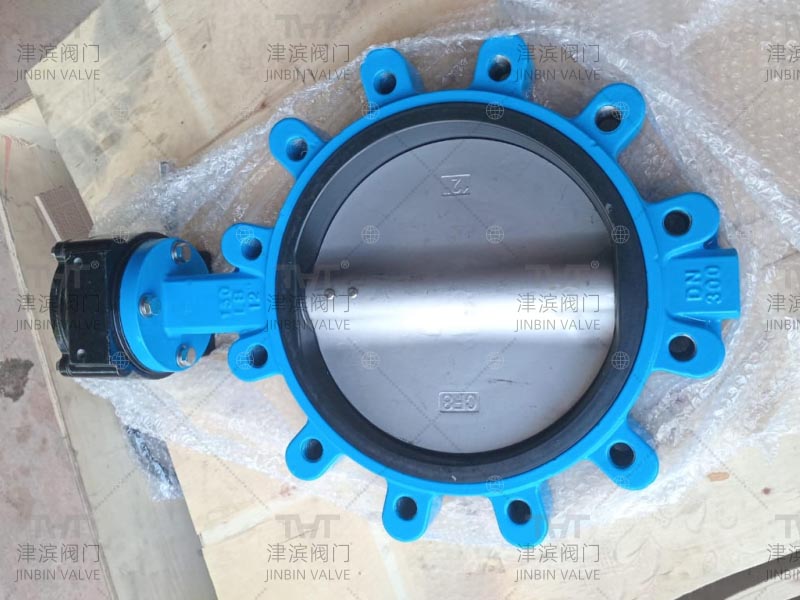
Jinbin Valve provided the subsequent rework plan: remove the original lug butterfly valve and replace it with a flange butterfly valve compatible with this expansion joint. According to the structural length of the new butterfly valve, cut and adjust the on-site pipeline for realignment, then complete the flange tightening work between the expansion joint and the new valve. The whole rework procedure includes pipeline cutting, old component removal, new valve positioning, flange centering and sealing inspection. This process is time-consuming and labor-intensive, incurring extra costs for labor, materials and construction period, and directly delaying the project progress.
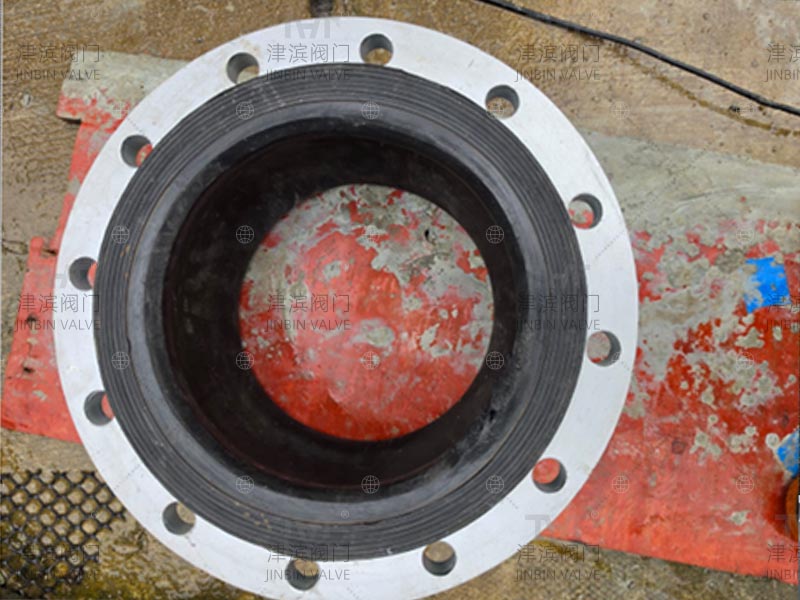
This case delivers an important reminder for overseas engineering procurement. When selecting pipeline valves and matching expansion joints, buyers should not select and purchase products only by nominal DN size. Valves of different structures (lug butterfly valves, flange butterfly valves) and expansion joints differ in internal bore, end face structure and installation length even if they have the same nominal diameter.
For overseas engineering procurement, project owners must submit working condition parameters including pipeline specifications, medium, working pressure and installation space to technical engineers of valve manufacturers in advance. Professional technicians should complete unified type selection and matching. Do not purchase valves and pipeline fittings separately and assemble them randomly on site. Blind independent procurement and assembly may easily lead to bore interference, sealing failure, valve disc jamming and other faults, resulting in rework and wasted project time and cost. Pre-project professional technical communication is the key to guarantee stable installation and smooth commissioning of your pipeline system.
As a valve manufacturer with 22 years of experience, Jinbin Valve produces various metallurgical valves and water conservancy engineering valves. Equipped with a professional technical team, we customize valves according to site working conditions and deliver optimal solutions for global customers. If you have any requirements, please contact us below. You will receive a reply within 24 hours. We look forward to cooperating with you.
Post time: Sep-02-2026


